WTF is a Biennale and does Venice matter?

The short of it is it's something that happens every two years and yes, Venice matters just maybe not for the reasons it thinks it does. Just remember the old cliched saying 'the purpose of a system is what it does' (Stafford Beer, 1979).
The Venice Biennale began way back in 1895, to honor King Umberto I, the King of Italy from 1878 until his assassination in 1900. Umberto I was famous for helping to form the 'Triple Alliance' with Germany, and Austria-Hungary, purely to support Italy's colonial dreams in Africa which would come to fruition as it subsequently helped trigger WWI and also Italy's eventual betrayal of the 'Triple Alliance' until a newly formed agreement was formed between Mussolini and Hitler leading into WWII.
I bring this history up because this years 61st Venice Biennale (2026) has seen an institution and many artists present artworks while also attempting ignore the world around them. It's also continued calls for boycotts and protests by activists, arts workers and artists. Many of the responses the protests, have fallen into one of two camps. Either a mixture of politics should be kept out of art or that the art alone should speak for itself regardless of the crimes of nation its representing. While the other camps argument has been that the Biennale is complicit in the arts washing of increasingly nationalistic and genocidal nations, specifically Russia, Israel and for many the US too.
It won't be surprising to many reading this that I'd probably fall into the second camp and think that due to the Australian State being the only State in the world materially supporting the US/Israel invasion of Iran that Australia should be included on that list of nationalistic and genocidal nations as well. But my main bug bear with the first camp is that politics and art have always been strange bed fellows and that no art alone cannot create change. Nor does art get to speak for itself beyond maybe the moment it was created.

Now completely acknowledging I haven't attended the 2026 Venice Biennale, nor any of them for that matter I've found all of the work that I've seen this year completely hollow. Devoid of any real connection to the world around it, the people or nations its representing or even that of the artists voice.
It sits in contrast to even the 2024 Venice Biennale which despite its obvious contradictions and attempts at institutional sanitization couldn't help but be connected to moment its was partaking in. And yes I'm including the nude performance works by Florentina Holzinger in this, as much as I find the work fun and am particularly fond of the jetski installation, it too rings hollow in this years context.
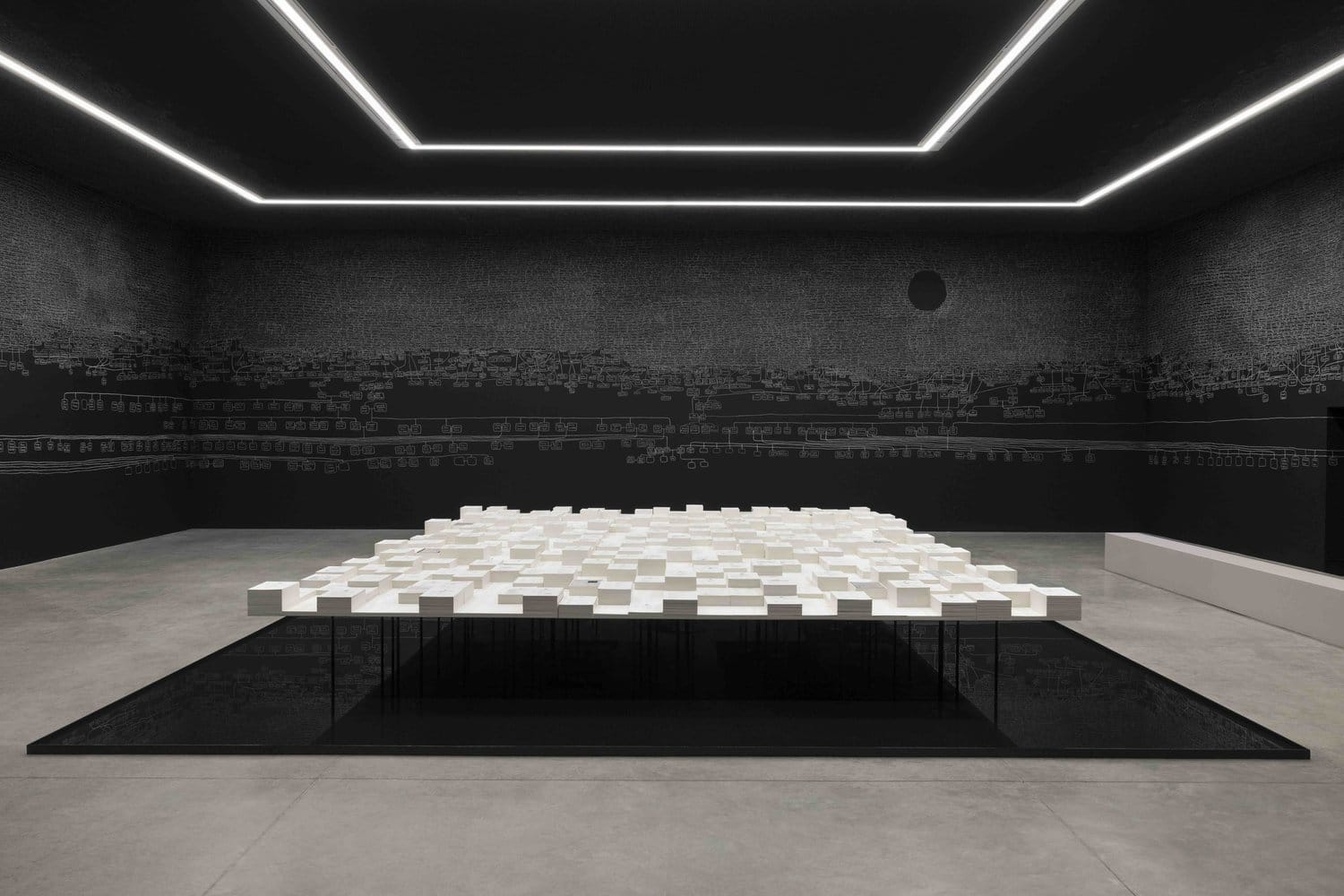
In 2024, Archie Moore a Kamilaroi and Bigambul artist based in so called Brisbane, brought home the Golden Lion for his work 'kith and kin' curated by Ellie Buttrose at the Australian pavilion. Moore is only the second First Nations artist to solo represent Australia after Tracey Moffat in 2017. Moore's work at Venice starkly explored the impacts of colonisation and Australia's own ongoing, yet often silent, genocide of First Nation's people. The installation featured a huge family tree drawn in chalk, connecting 2,400 generations over 200ft span of wall. The large gaps in the tree highlighting losses to oral history due to the process of colonisation. Accompanying this work was an installation featuring hundreds of printed documents piled on a table in the centre of the room. The documents containing official proceedings of all the inquest into First Nations deaths in custody since 1991, the Royal Commission into Aboriginal Deaths in Custody report was published.
I was fortunate enough to see this work when it was presented back in so called Brisbane at QAGOMA in 2025, with the Golden Lion sitting on a plinth just outside the exhibition. It's a work so of its time but also devastatingly timeless in its ongoing relatability. Walking into the installation at QAGOMA its impossible not to be overwhelmed by its beauty but also the horrific scale of human suffering and indifference of which we're capable of. Especially when that material point is made by Moore through the weaponisation of bureaucratic documents and process.
I digress, because in much the same way the Venice Biennale has always been about the politics of colonial states it too has on occasion provided opportunities for subversion.
The journey for the 2026 Australian commissioned artist Khaled Sabsabi and curator Michael Dagostino was already marred in politics before the first brush strokes were made. After being announced as Australia's creative team in February 2025, a week later they were de-commissioned which then followed an extensive arts industry led campaign to have Sabsabi reinstated in July of the same year. Sabsabi and the increasing political censorship of artists in so called Australia has been a load bearing thread through much of what I've written this past year.
Not only has Sabsabi's journey to the Biennale been fraught with political obstacles as has the Biennale this year. With the entire biennale’s prize jury resigning in protest of the inclusion of two States currently facing International Criminal Court charges, Israel and Russia. This is the first time since 2022 that Russia has been invited to participate due to its ongoing invasion of Ukraine. A contradiction that was pointed out in 2024 due to the inclusion of Israel, which seemingly in 2026 Venice has responded not by removing Israel but by inviting Russia back.
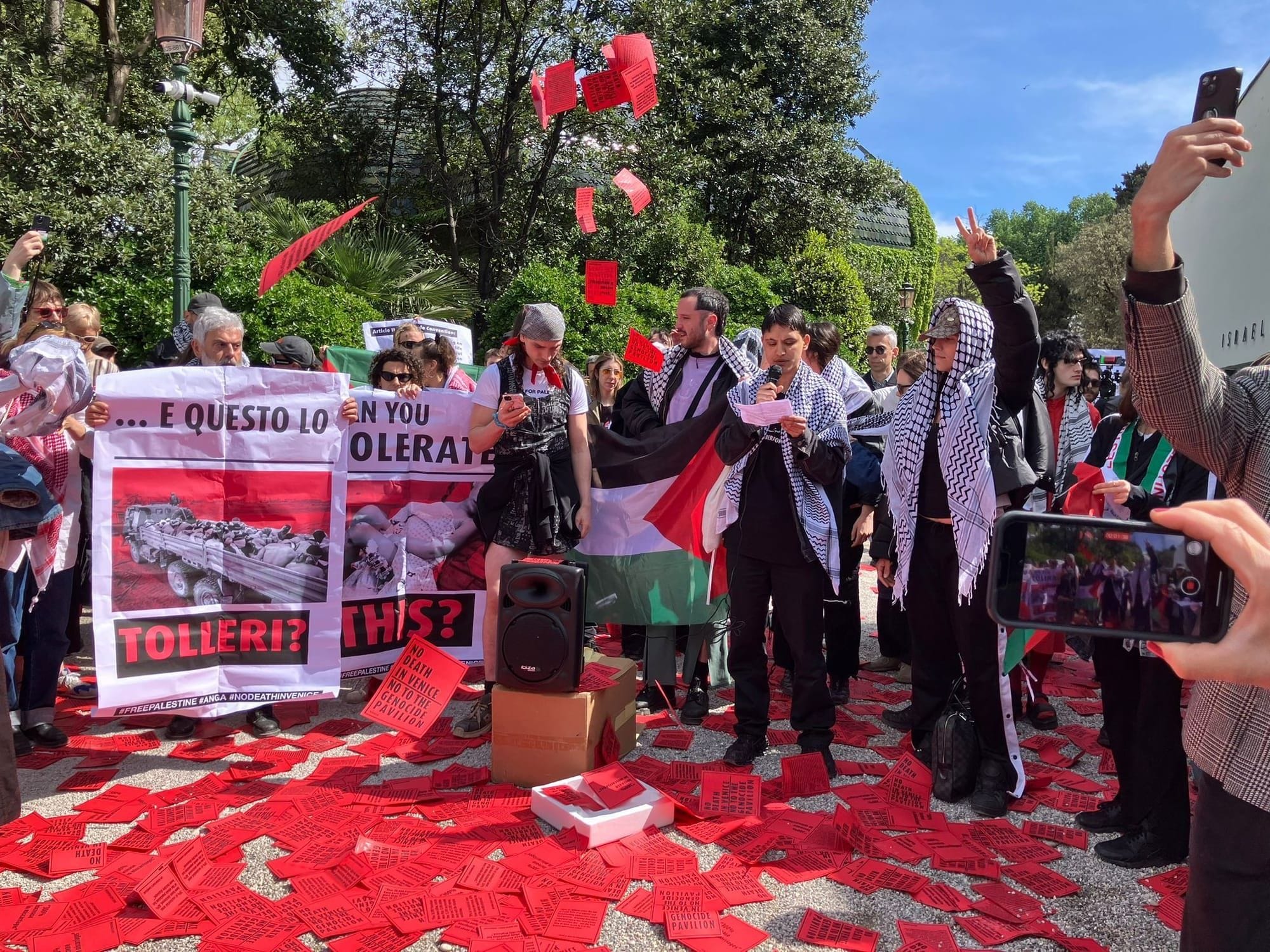
In response to this years Biennale, Art Not Genocide Alliance (ANGA) once again led collective action and protest against the inclusion of Israel at this year Biennale. With 236 artists, curators and art workers involved in this year’s Biennale signing an open letter to the board of the Biennale calling on Israel's pavilion to be removed. Notably it appears that Sabsabi and Dagostino, representing Australia are not public signatories. But five 'artists' working on 'In Minor Keys' by Sabsabi have chosen to sign the letter anonymously fearing 'physical, political or legal harms from signing publicly'.
Following the calls to boycott by ANGA in 2024, Ruth Patir, the artist representing Israel was able to sidestep true accountability and complicity by taping a sign on the door to the Israeli pavilion stating the below;
“The artist and curators of the Israeli pavilion will open the exhibition when a ceasefire and hostage release agreement is reached.”
In 2026, with an apparent ceasefire in effect despite no actual pause in the ongoing murder of Palestinian's by Israel, this years Israeli artist Belu-Simion Fainaru has made no such attempt to appease calls to remove the Israeli pavilion. Instead Fainaru threatened the prize jury with legal action on the grounds of 'racism' for their published statement. As already mentioned instead of backing down at these threats, the jury chose to resign.
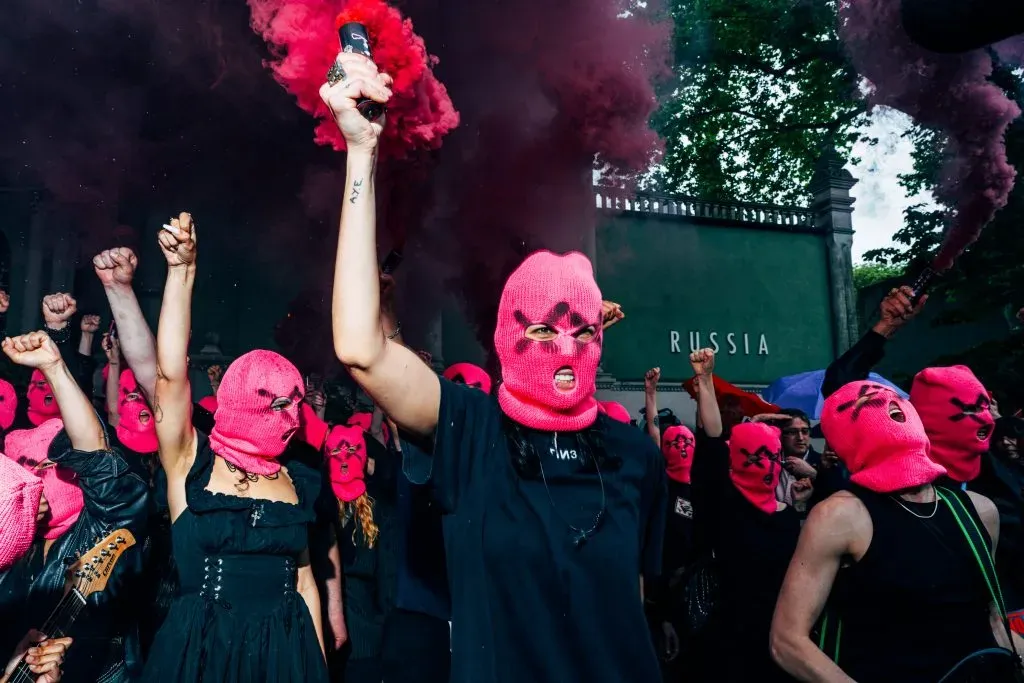
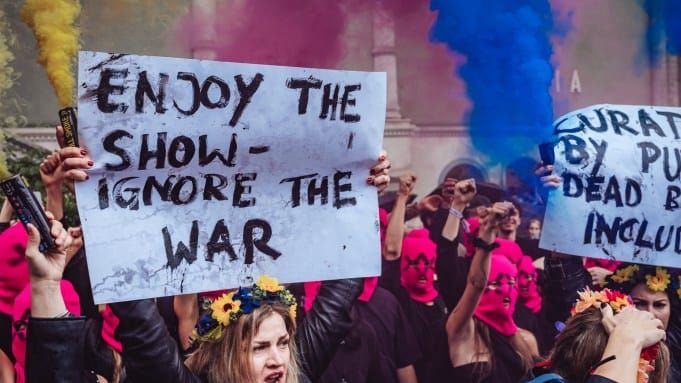
Meanwhile at the Russian pavilion protests led by Pussy Riot, temporarily closed the Russian pavilion. Wearing their iconic pink balaclavas the activists blockaded the pavilion, lighting brightly coloured flares while chanting “Blood is Russia’s Art”. Due to Russia's inclusion this year, the European Commission is now investigating whether sanctions against Russia have been breached by Italy.
“It’s weird to me that Europe keeps saying that Ukraine is a shield for the entire European continent but it opens its doors time and time again to Russian propaganda. It’s heartbreaking for me.” Nadya Tolokonnikova, a founding member of Pussy Riot.
With the prize jury resigning in protest, this years Biennale has once again capitulated, choosing now not to award the Golden Lion. Instead, instituting a new prize called the 'Visitor Lions' or a fancy way to say people's choice. With the Russian and Israeli Pavilions being eligible. In subsequent protest, 52 artists have now withdrawn their work from consideration for the 'Visitor Lion' award.
Jo Pickup wondered in Artshub, whether the 61st Venice Biennale will be the most politically explosive in its history? Pickup also noted though that the Biennale's 'structure and design to have been inextricably linked with politics from the start'. Which brings me back the old cliche I mentioned at the start, 'the purpose of a system is what it does'.
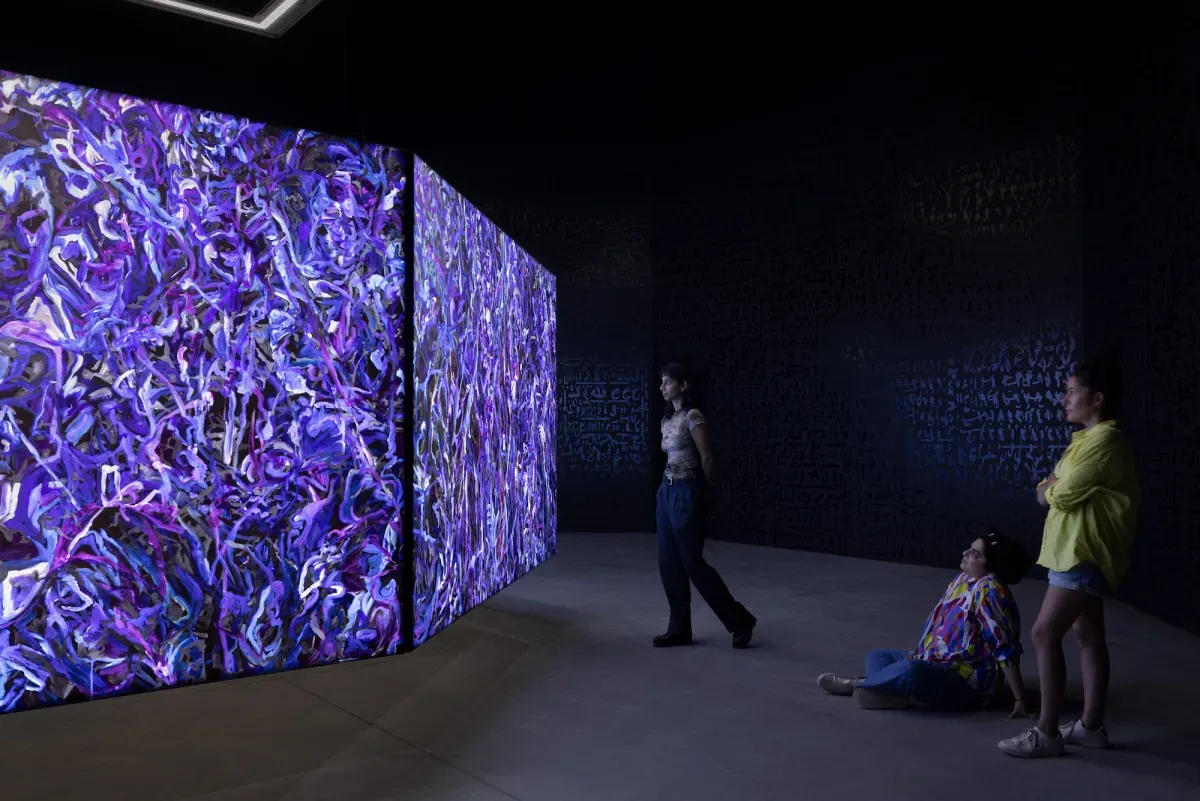
It shouldn't be lost that the Israeli artist Fainaru and Sabsabi's work could be mistaken for each others if you only ever heard the artists speak about their work. Fainaru's work 'Rose of Nothingness' aims to create 'a space for reflection' with the artist stating that he "does not operate within political frameworks”. Similarly Australian artist Sabasi's works 'In Minor Keys' and 'conference of one's self' aims to invite "all visitors to contemplate their own relationships, both with others and themselves". With both works by the artists building out from famous poetry works and both works attempting to sit outside of the current sociopolitical context with which they find themselves. These works appear astoundingly beautiful through my little backlit screens but so does the sharp hollow noise they appear to make.
The Biennale has always been fraught with geopolitics and activism, as have the Olympics for which they're often compared to. It is a function of both global institutions, its why they exist and matter. They are stages where for a brief moment everyone is genuinely enabled to participate in the politics of our humanity. Which is why when nations, artists or athletes choose silence on these stages, its that silence that rings loudest.
From 1974 when during apartheid South Africa was excluded from the Biennale due to the ongoing cultural boycott. Or the fact that the Cannes Film Festival was created due to Mussolini and Hitler's active meddling in the Venice Film Festival, which was itself founded as part of the Venice Biennale by Italian fascist leader Giuseppe Volpi. Or even again in 1974 when the Biennale abandoned its decades old model in solidarity with the Chilean people who were undergoing a fascist coup.
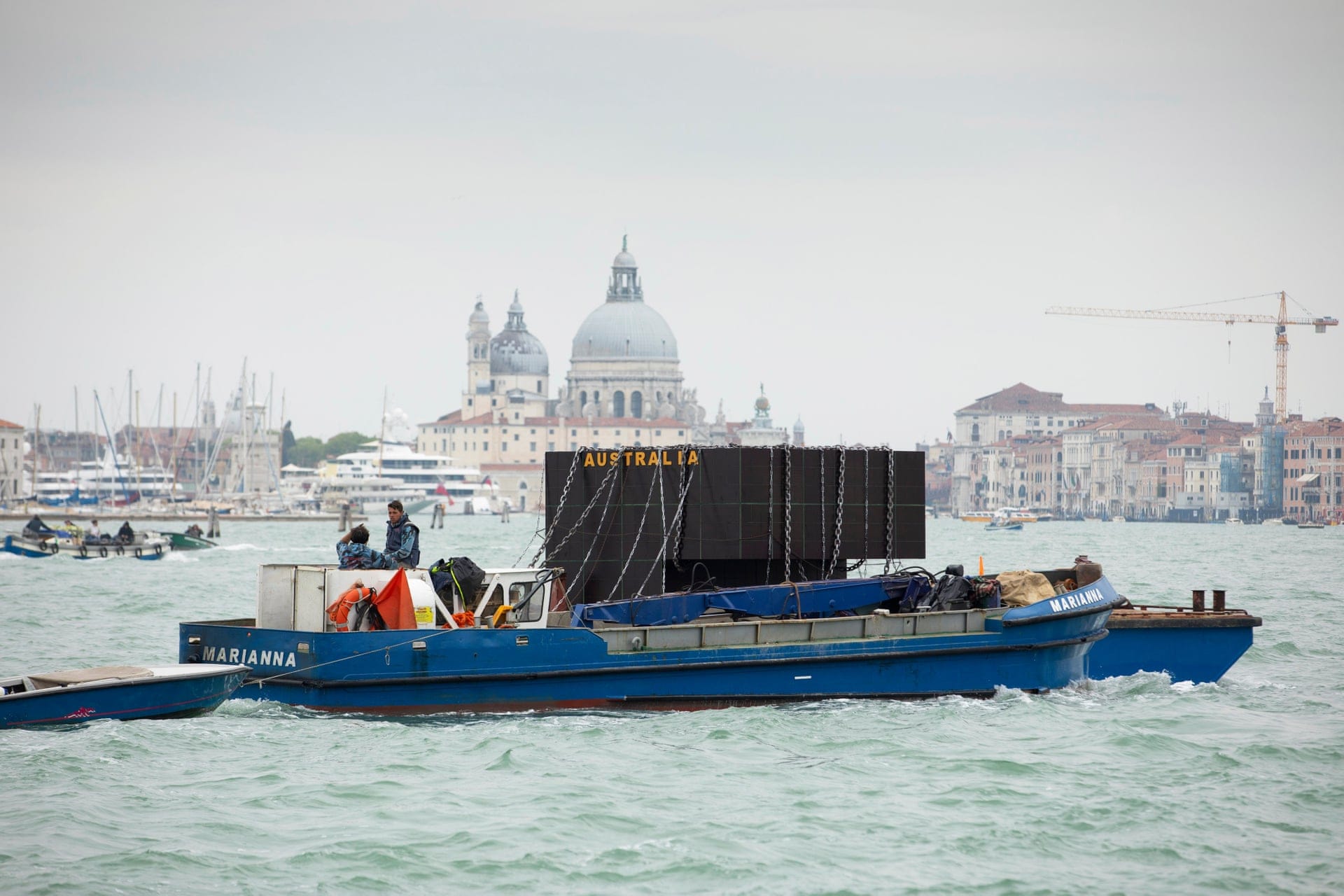
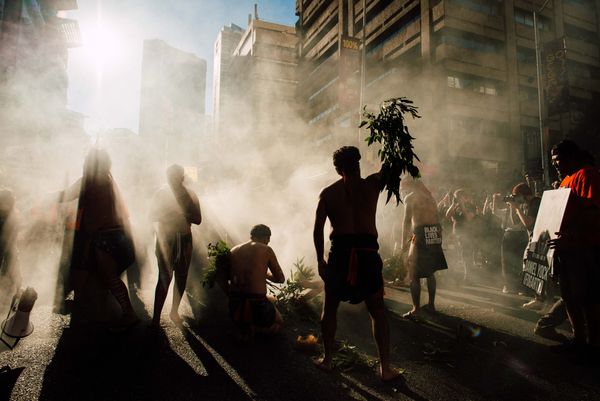
My favourite Biennale protest though and the one the sings closest to current artful protests occurring in 2026 by ANGA and Pussy Riot was by Richard Bell. In 2019 at the 58th Venice Biennale, Bell a Brisbane based First Nations artist sailed an imprisoned replica of Australia’s pavilion past the Biennale. Having applied and been rejected to represent Australia, Bell crowd funded his and his works own way to Venice. He also displayed 'Embassy 2019 Venice Biennale - Silence Is Consent' a work replicating the original Aboriginal “embassy” erected by Indigenous activists Michael Anderson, Billy Craig, Tony Corey and Bertie Williams on the grounds of Australia’s Parliament House in Canberra in 1972.
Both works by Bell, not only criticised the Biennale but also Australia's ongoing and often ignored complicity in the genocide of First Nations people here on this continent. The works challenged not only the place for quote unquote minority artists at these pavilions but also their potential complicity in contributing to that silence when platformed. It's seemingly what happens outside of the nations pavilions, but on the streets or canals for that matter that lends the Biennale its artful meaning.
In "The Field of Cultural Production" (1993) a collection of essays on art by Pierre Bourdieu from 1968 to 1987, Bourdieu argues that whether or not something is art can't be answered by the artist's intention or even the work. Instead, whether or not something is art is defined by a community including curators, institutions and of course audiences.
To quote the Poland’s culture minister, Marta Cienkowska's response to this years inclusion of Russia at the Biennale, “to speak the language of culture in order to drown out the reality of war” is a “classic mechanism of propaganda”. Or to bash home the cliche again, 'the purpose of a system is what it does'. If we accept Bourdieu and even Cienkowska's statement, how can art presented under such banners be anything other than the banner its presented under?
It's been interesting watching the legitimate criticism of the recent Met Gala, for its blatant hollowness, yet many making those observations are unable to level similar criticisms at the Venice Biennale. In part this is because to quote Derek Guy, "many don't think of clothes as anything more than consumables". It's easier to criticise the flagrant expense and waster of something like the Met Gala because of this, despite the clear similarities between to two events. Knitting and sewing is often coded as craft or feminin while sculptures and paintings are elevated to art as they're masculine coded.
Putting aside that the Met Gala is chaired by Jeff Bezos, Guy goes on to point out that the Met Gala directly raises money for the Metropolitan Museum’s Costume Institute. In world of increasingly fraught arts funding, the Gala is on the verge of ensuring that the Metropolitan Museum’s Costume Institute will be self reliant in a few years. Ensuring work for countless artists and curators. Similarly the Venice Biennale ensures work for thousands of artists and artworkers across the hundreds of countries.
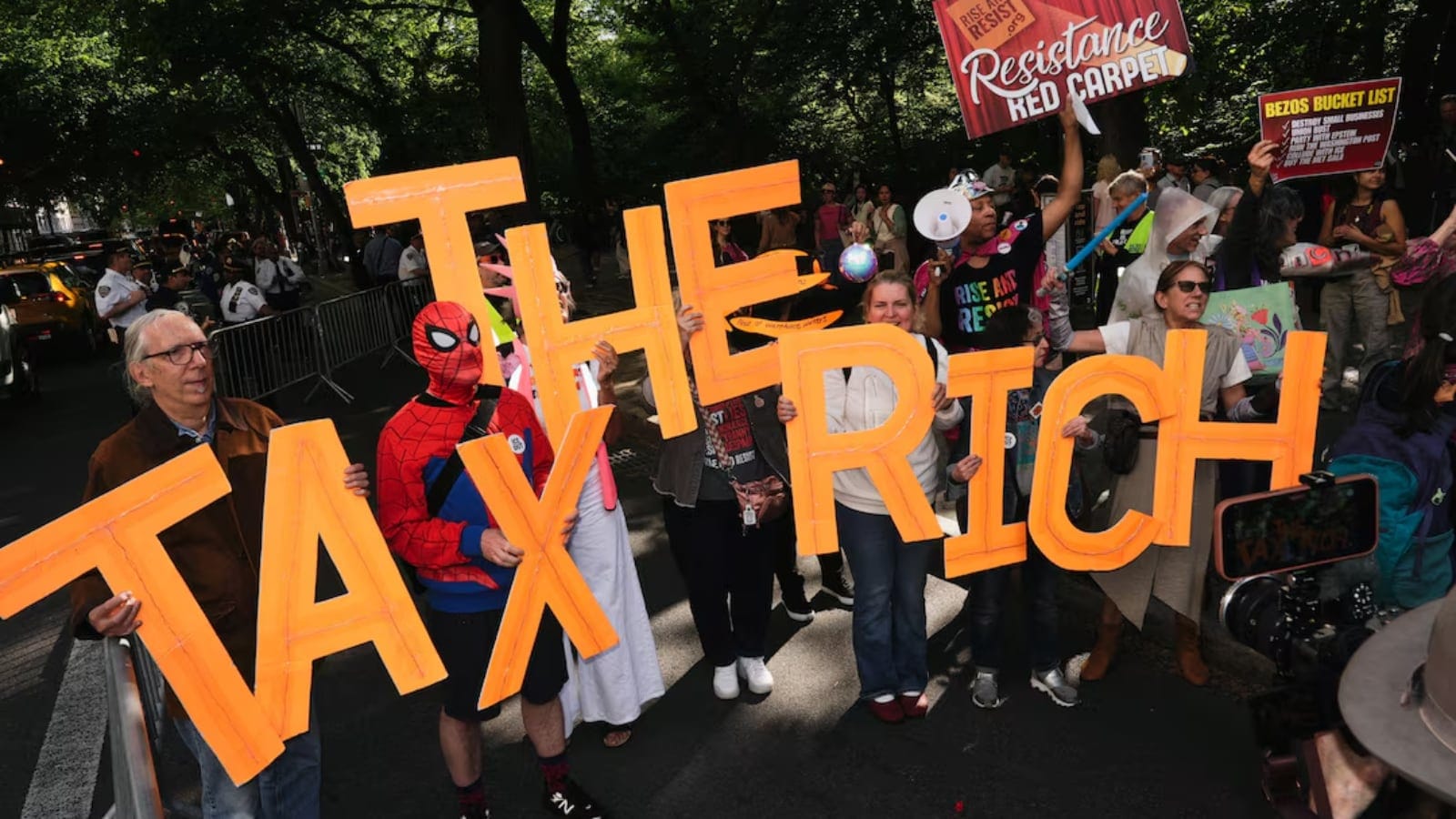
Similar to this years Biennale, workers also organised a counter event to the Met Gala across town in the Meatpacking District. The 'Ball Without Billionaires' was organised by various labor unions representing workers at Amazon, Starbucks, Uber and Wholefoods. Contrasted with this year's Met theme of 'fashion is art' the workers led event theme was 'labor is art. With Service Employees International Union (SEIU) President April Verrett saying onstage:
"Every year, the Met tells a story about who matters, who gets seen, who gets celebrated. This year we decided to center on us."
What does it say then when the Biennale hosts pavilions for both Israel and Russia but not Palestine? Both the Met Gala and the Venice Biennale contribute to Bourdieu's idea of the "collective belief," that art results from social interaction and institutions that recognize and legitimize that thing's status. Art legitimacy is about symbolic production or 'the discourse' not material production or 'the object'.
This is why the Biennale matters, it matters for the states which host pavilions, it matters for the institutions which benefit from the influence and money that being complicit in soft power enables. It does not matter for the artists, it does not matter for the art. Those things will continue regardless of if the Biennale does or does not. If anything remains true I don't see how participating artists, with a couple of exceptions of course, can truly present work at the Biennale and not be painted with brush of their nations actions.
Things to read if you're interested in the discussions surround the 61st Venice Biennale:
https://hyperallergic.com/the-case-for-boycotting-the-2026-venice-biennale/
https://hyperallergic.com/israels-plan-to-artwash-genocide-at-the-venice-biennale/
https://www.abc.net.au/news/2026-02-25/khaled-sabsabi-venice-biennale-australia-pavilion/106374090
https://economiacreativa.centro.edu.mx/the-art-of-forgetting-reading-the-1974-venice-biennale/
https://artreview.com/khaled-sabsabi-on-representing-australia-at-the-61st-venice-biennale/
https://everythingispolitical.com/readings/2026-met-gala-empty